What the black streaks on your roof actually are
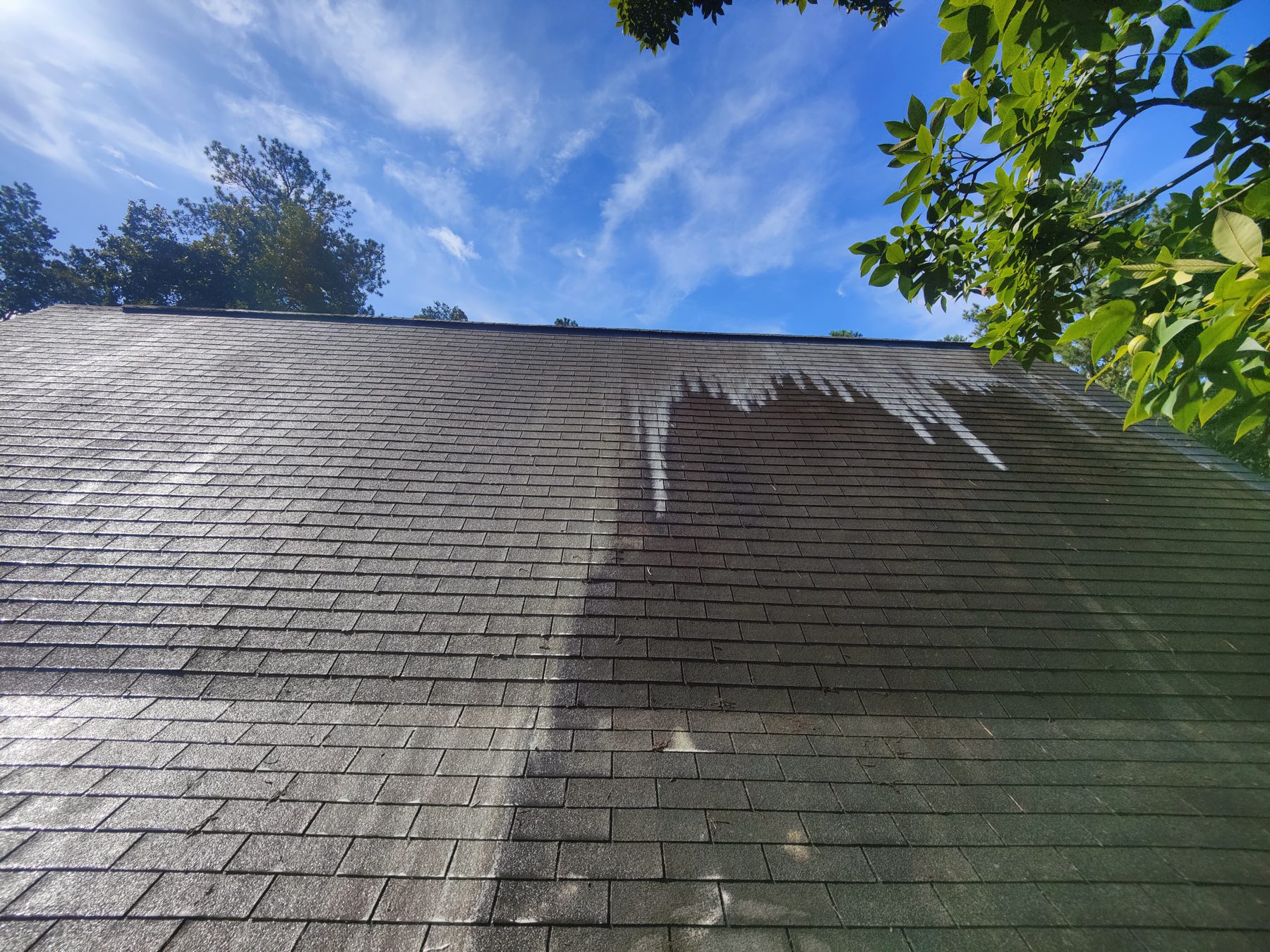
The dark stripes running down a shingle roof are not dirt, soot or mildew from the gutters. They are a hardy, algae-like organism called Gloeocapsa magma. It travels on the wind, lands on the roof, and feeds on the limestone that manufacturers mix into shingles as filler. As it grows it forms a dark protective coating, which is the black you see from the street.
It always starts where the roof stays damp longest. In Columbia that is the north slope and any section under oaks or pines, and with our humidity it spreads a little further down the roof every summer. Rain then carries it down the slope, which is why it shows up as streaks rather than patches.
Moss and lichen are a different problem. They grow on the same shaded slopes, but they root into the shingle, hold water against it, and lift the edges as they grow. Both need dealing with, and neither should be scraped or blasted off.
What a pressure washer does to a shingle
An asphalt shingle is a mat soaked in asphalt and covered in small mineral granules. Those granules are the shingle's armor. They shade the asphalt from the sun, which is what breaks it down, and they give the roof its color.
A pressure washer strong enough to remove the streaks is strong enough to strip those granules. The roof looks clean for a season, and then the bare patches bake in the South Carolina sun, dry out, crack and curl years before they should. Water forced up under the shingle edges can also get past the seal strips and into the decking.
The Asphalt Roofing Manufacturers Association, the trade group for shingle makers, advises against pressure washing asphalt roofs, and shingle makers say the same in their care guidance. Walking a wet roof with a wand in your hand is also one of the easier ways to get hurt in this line of work.
How soft washing a roof works
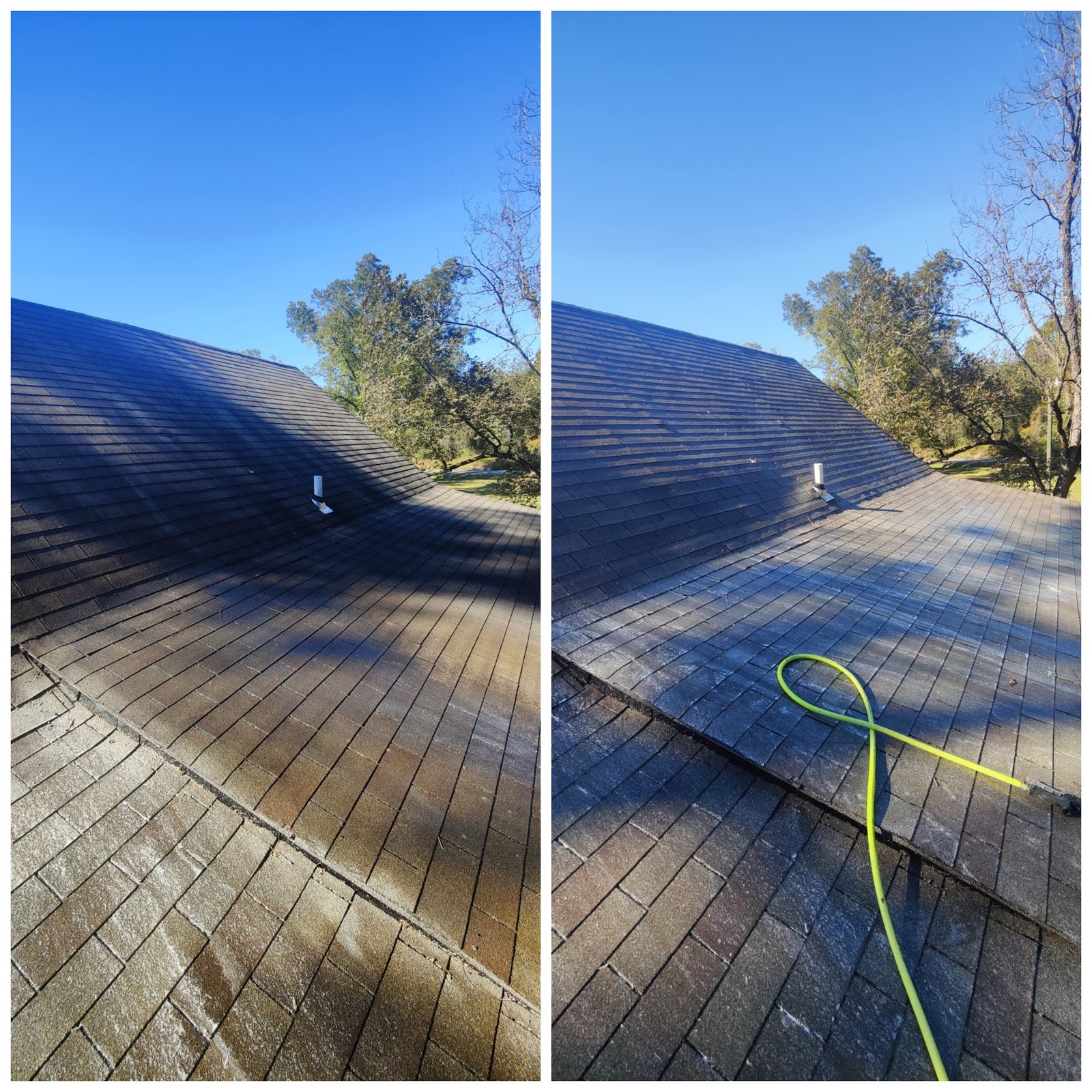
A soft wash does the cleaning with chemistry instead of force. A cleaner made for the job goes on at about the pressure of a garden hose, soaks into the growth and kills it at the root. The black streaks lighten and disappear as it works, usually while we are still on the ladder.
Moss and lichen take longer, and that is on purpose. They die on the day, turn pale, and let go over the following weeks of rain. Pulling them off while they are still holding on takes shingle with them.
The rest of the job is protecting everything around the roof. Beds and shrubs get soaked with water before we start and rinsed again after, so anything that runs off is diluted. Gutters get flushed of whatever the roof sheds, and walks and drives get rinsed at the end. We treat most roofs from the ladder and the edge, because walking on shingles is the kind of wear the cleaning is meant to prevent.
That is the same approach on every job on our roof cleaning page, and it is the method shingle makers ask for.
How long a soft-washed roof stays clean
Three to five years is typical around Columbia. Because the cleaner kills the growth rather than just knocking the top layer off, it does not come straight back the way it does after a pressure wash. Roofs under trees and on the shaded side of the house sit at the shorter end of that range.
A few things stretch it:
- Trim back branches that hang over the roof, so it gets sun and dries after rain.
- Keep the gutters clear, so water runs off instead of sitting at the roof edge. Once a year is the usual rhythm here, after the leaves come down in the fall.
- Some homeowners add zinc or copper strips along the ridge. Rain washes a trace of metal down the slope that slows regrowth.
Signs a roof needs a roofer, not a cleaning
Cleaning makes a sound roof look and last like one. It cannot fix a roof that is already failing. Call a roofer first if you see shingles that are curled, cracked or missing, bare patches where the granules are gone, piles of granules in the gutters or at the bottom of the downspouts, or any sign of a leak inside. If we see any of that when we quote or on the day, we tell you before we start.
Can I clean my own roof?
You can, carefully, but go in with your eyes open. The cleaners that work on roof algae will also burn plants and grass if they are not rinsed, a wet roof is slick, and most of the damage we see comes from someone with a rented pressure washer on a ladder. If you do it yourself, stay off the roof where you can, never use pressure on the shingles, and soak your beds before and after.
If you would rather not, ask us for a quote. Most roofs are measured from satellite photos, so there is no site visit, and the price is fixed before we start. Roof and house washing on the same visit is the most common order we get, and gutter cleaning pairs well with both.
Roofs we see the most streaks on: Forest Acres and Columbia under the old oaks, lake houses in Irmo and Chapin, and wooded lots out in Blythewood and Hopkins.